Heavy Rainfall Cloudburst Warnings: Stay Safe, Act Fast
Published: 11 Oct 2025
Introduction
Cloudburst are sudden. They strike fast. Mountains and rivers cannot handle them. In Pakistan, areas like Gilgit-Baltistan, Swat, Abbottabad, and Kashmir are at high risk. In 2025, Buner district saw over 150 mm rain in just one hour. Roads washed away
Homes collapsed it shows how dangerous cloudbursts can be. Warning systems save lives.
What is a Cloudburst?
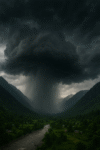
A cloudburst is not ordinary rain. It is extreme, intense and sudden. More than 100 mm of rain in one hour is typical. It causes flash floods. Landslides follow. Homes, roads, and crops suffer.
Why Do Cloudburst Happen?
1. Mountains and Geography
Mountains push clouds upwards. Moist air rises. Condensation happens fast. Rain falls in torrents. Valleys cannot hold it. Flooding starts
2. Climate Change
The planet is warming. Hot air holds more water.
3. Unstable Weather
Monsoon patterns change.
Storms intensify quickly. Forecasting becomes hard.
4. Urban Expansion
Cities and towns block natural water flow. Rivers overflow
Damage increases.
Areas Most at Risk
- Gilgit-Baltistan: Narrow valleys. Flash floods common.
- Swat: Landslides frequent.
- Abbottabad: Sudden urban floods. Roads block fast.
- Kashmir: High disaster risk.
Impacts of Heavy Rainfall Cloudburst
1. Environmental
- Landslides destroy forests.
- Rivers flood farmlands.
2. Human and Social
- Families lose homes.
- Roads, bridges collapse.
- People displaced.
3. Economic
- Crops destroyed
Cloudburst Warning Systems in Pakistan
1. Pakistan Meteorological Department (PMD)
Tracks weather.
Issues warnings.
Uses radar.
2. Doppler Radar
Measures rainfall intensity
Tracks storms.
3. Satellite Monitoring
Tracks cloud formation
Moisture detection
4. Flash Flood Guidance System (FFGS)
Real-time river and rainfall data.
Challenges in Cloudburst Warnings
- Suddenness: Cloudburst develop in minutes.
- Limited stations: Remote areas often unmonitored.
- Low awareness: Many people don’t know what to do.
How to Stay Safe
Before Cloudburst
- Keep emergency kits ready.
- Weather alerts.
During Cloudburst
- Move to higher ground.
- Avoid floodwaters.
After Cloudburst
- Help rescue teams if safe..
- Avoid risky roads.
Role of Technology
- Satellites: Detect heavy clouds.
- Mobile alerts: Warn people fast.
- GIS mapping: Identify danger zones.
- AI models: Predict rainfall patterns. (Simple use)
Technology cannot stop nature, but it can buy time.
Every minute counts.
Lessons from Past Disasters
- Buner 2025: Over 150 mm rain in one hour. Roads, bridges damaged. Shows need for real-time alerts.
- Swat 2018: Sudden cloudburst destroyed crops and cut off villages.
- Gilgit-Baltistan floods: Early warning systems prevented major looses.
Conclusion
Cloudburst are dangerous. But preparedness saves lives. Communities must be alert government must improve warning systems. Awareness helps more. Don’t wait for disaster to strike. Act before, during, and after. Every alert counts. Mountains valley rivers make natural disasters deadly. But with strong warnings, community action damage and loss of life can be minimized.
FAQs
Q1: How fast does a cloudburst occur?
Minutes to an hour. Very sudden.
Q2: Which areas in Pakistan are most at risk?
Gilgit-Baltistan, Swat, Abbottabad, Kashmir. Mountainous regions mostly.
Q3: How can technology help?
Satellites, radar, GIS maps, and mobile alerts can warn communities early.
Q4: How can I prepare for a cloudburst?
Keep emergency kits, monitor weather.