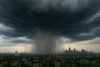
Cloudburst Heavy Rain in Indonesia: A Rising Menace Amid Wet Season Extremes
Published: 25 Oct 2025
Meta Description:
Explore how intense rainfall flash floods and cloud burst type are affecting Indonesia. Learn about recent events, underlying causes regions, early warning gaps and what must be done to build resilience.
Heading
When the Sky Unleashes: Indonesia’s Escalating Rainbursts and Flash Floods
Introduction
Indonesia an archipelago of more than 17,000 islands has long lived under the sway of tropical monsoons and seasonal. Yet in recent years a troubling pattern has emerged: rainfall so intense and so sudden that it gives the appearance of a cloud burst event even if the meteorological definition doesn’t always apply. These rain bursts trigger floods, landslides and damage across regions like Java Sumatra and Bali. With climate change urban sprawl and land use change as compounding factors Indonesia’s flood risk increasingly resembles high mountain cloud burst zones though the geography is quite different. This article delves into the phenomenon its driver impacts and what can be done.
1. What Is a Rainburst Event?
While the term cloud burst is often used in popular discourse in meteorology it implies an extremely intense rainfall over a very short period (often >100 mm/hr) in a confined area typically in mountainous terrain. Indonesia’s events often differ in setting much happening on coastal plains or volcanic slopes but the effect is similar: sudden downpours, overwhelmed drainage rivers bursting banks and landslides.
For example a recent report described rainfall on Bali on 9-10 September 2025 as a sudden high intensity burst equal to what some districts normally see in a month in just a few hours. Weather Blog
Thus, while not always a textbook cloud burst Indonesia’s rain burst or extreme downpour events deserve similar attention.
2. Recent Cases & Trends in Indonesia
2.1 Bali (September 2025)
In Bali intense rainfall late on 9 September caused severe flooding in Denpasar and surrounding districts. Bikes floated at intersections hotel lobbies were flooded waist deep and mountain roads were washed out by landslides. At least 18 people died and more than 500 were evacuated. Weather Blog+1
2.2 West Sumatra (2024)
In May 2024 heavy rain and associated volcanic lahar flows in West Sumatra killed 67 people and left many missing. Rivers overflowed and villages were swept away. Wikipedia+1
2.3 Jakarta & Coastal Lowlands
On 1 January 2020, flash floods in Jakarta dropped approximately 15 inches (≈380 mm) of rain overnight inundating the rivers. At least 66 people were killed. Wikipedia
2.4 Wet Season Lengthening & Heightened Risk
Meteorology, Climatology, and Geophysical Agency (BMKG) has warned that Indonesia faces a longer wet season (September 2025 to April 2026) and that some areas could see the equivalent of a month’s rainfall in a single day.
3. Why These Extreme Rain Events Are Increasing
3.1 Climate Change & Moisture Loading
Warmer air holds more moisture, which can lead to heavier downpours when conditions trigger convection. Research on the Madden–Julian Oscillation (MJO) shows that certain phases increase the probability of extreme precipitation events in Indonesia by up to 70%.
3.2 Geography & Topography
Although Indonesia doesn’t have the high altitude terrain typical of classic cloud burst zones (eg Himalayas) many regions combine volcanic slopes steep terrain and sudden orographic lifting which can rapidly intensify rainfall.
3.3 Urbanisation, Drainage & Land Use
In cities like Jakarta inadequate drainage dense urban build-up and deforestation upstream reduce the system’s capacity to absorb and route heavy floodwaters. In Bali, clogged drains and large surfaces amplified flood depths.
3.4 Volcanic & Lahar-linked Flooding
Combination of rainfall and ash deposits (as in West Sumatra) amplify risk heavy rain mobilises rocks and causing river banks to burst and mudflows to surge.
4. Affected Regions & Vulnerabilities
- Java (Jakarta, Central Java) – high population density, low-lying coastal zones, many rivers.
- Sumatra (West Sumatra, Pesisir Selatan) – mountainous, volcanic, heavy monsoon rainfall.
- Bali and Nusa Tenggara – tourism hubs, slopes feeding to low-lying hotels and infrastructure.
- Sulawesi, Maluku, Papua – less documented but expected risk due to changing rainfall patterns and weaker infrastructure.
5. Impacts: Human, Infrastructure & Economy
5.1 Human Casualties and Displacement
The flash floods in Sumatra resulted in dozens of deaths and thousands of people displaced. In Bali hundreds evacuated and the tourist industry disrupted.
5.2 Infrastructure Damage
Flooding can inundate roads bridges airports (as in Bali) power systems and sewage treatment plants.
5.3 Economic Disruption
Tourism in Bali agricultural lands in Sumatra business districts in Jakarta all suffer when floods strike. Loss of crops shut downs of resorts and evacuations add to the economic toll.
5.4 Environmental & Secondary Hazards
Steep slope flooding triggers landslides volcano ash laden rainfall triggers lahars salt water intrusion in coastal zones may accompany high-water events.
6. Are These Events Truly “Cloud Bursts”?
While Indonesia may not fit the classic mountainous cloud-burst profile many downpours functionally mimic them intense short-duration rain overwhelmed drainage, rivers bursting banks. The 9-10 September 2025 Bali event was described as a sudden high-intensity burst equal to what some districts normally see in a month” in a few hours.
7. Early Warning Systems & Preparation Gaps
7.1 Weather Forecasting & Real-Time Monitoring
Indonesia has advanced meteorological ability but unpredictability remains especially when heavy downpours form rapidly. The influence of the MJO allows some forecasting of heightened risk.
7.2 Community-based Alerting
Evacuation routes, local knowledge and community drills remain weaker in many rural or slope regions.
7.3 Infrastructure Resilience
Drainage and river bank reinforcement and urban planning to prevent runoff must be improved. In Bali, for example hotel zones became water traps due to parking lots channelling rather than dispersing water.
7.4 Integration of Volcano & Rain Hazards
In places like West Sumatra combined rainfall + lahar risks demand a cross hazard approach.
7.5 Insurance, Recovery Planning & Land-Use Policy
Often neglected land use regulation upstream, deforestation control and flood insurance mechanisms.
8. What Must Be Done: Strategies for Building Resilience
- Upgrade drainage and green-infrastructure: permeable surfaces retention ponds improved stormwater systems.
- Slope-management & reforestation: especially in steep zones to reduce runoff speed.
- Urban planning for flood-flow routing: avoid building in natural channels, maintain river buffers.
- Community education & drills: teach families how to respond to sudden floods how to evacuate quickly.
- Enhance forecasting & early-warning: integrate MJO forecasting, remote sensing local sensor networks.
- Cross-hazard risk mapping: especially for rainfall plus-volcano zones map combined risks of rain + lahars.
- Policy & regulation: restrict deforestation enforce flood plain control ensure tourism infrastructure is flood-resilient.
- Financial instruments: flood-insurance catastrophe bonds and risk sharing mechanisms for tourism and hospitality sectors.
9. FAQ
Q1: Does Indonesia experience “cloud bursts” like the Himalayas?
A: Strictly speaking, not always in the same mountainous context but many rainfall events mimic cloud-burst behaviour very intense, short duration rain causing floods.
Q2: When is the risk highest?
A: The wet season spans roughly November to April, but in 2025 the risk period has been extended (September 2025–April 2026). Reuter
Q3: Why do urban areas flood so badly?
A: Urban surfaces are impermeable drainage may be under capacity and nearby hills or rivers can deliver fast runoff. In Bali hotels, parking lots funnelled floods into buildings.
Q4: Can we really forecast these rain bursts?
A: Forecasting is improving. Studies show that the MJO has a strong influence on extreme rainfall probability offering some lead time.
Q5: What immediate steps should households take?
A: Clear gutters, raise valuable items off the floor keep a flood-grab kit ready (boots, charger, torch, IDs), know evacuation routes avoid riverbanks after heavy rain.
Conclusion
Indonesia stands at a pivotal moment. What were once rare, severe rainfall events are now becoming more frequent and approaching the effect of classic cloud-burst even if the geography differs. Whether it is the flooding in Bali the landslide and flood combo in Sumatra or the inundated streets of Jakarta the message is clear the nation’s flood resilience systems must evolve quickly.
While the meteorological label may not always fit the impact does. Heavy downpours, fast-moving water, overflowing rivers and saturated slopes are no longer distant possibilities they are daily risks.